

Making Halloween Welcoming for Every Child
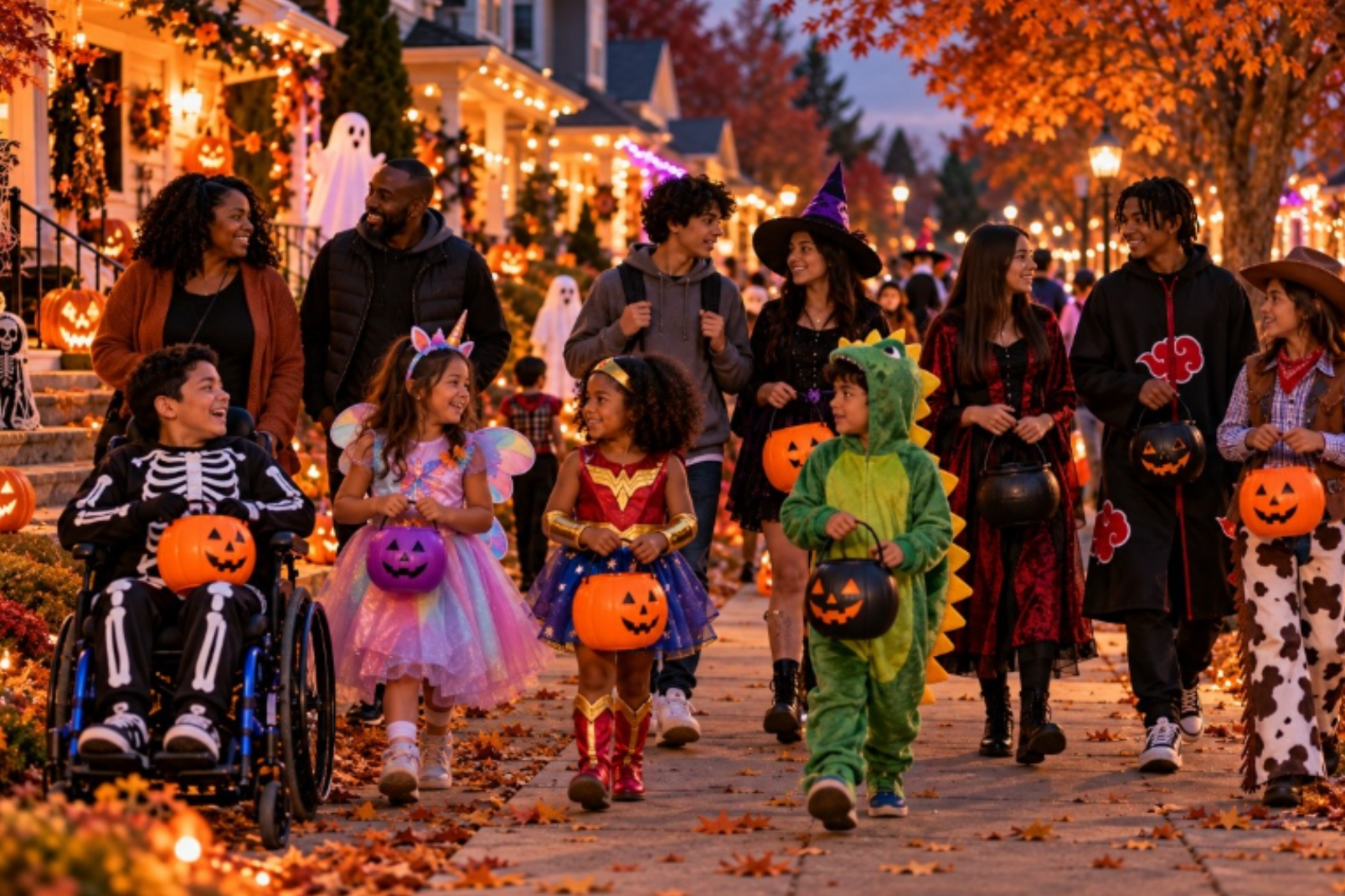
Family and friends dressed in costumes on Halloween trick-or-treating
This Halloween, a little patience and understanding can help every child feel included.
Halloween is a time for costumes, candy, neighborhood gatherings, and childhood excitement. For many families, going door to door saying “trick-or-treat” is a beloved tradition. But not every child experience’s Halloween in the same way.
Some children may not speak when they approach your door, and some may communicate through gestures, signs, or an Augmentative and Alternative Communication (AAC) device. Some may not make eye contact, while others may become overwhelmed, and some children may look older than we expect a trick-or-treater to be.
With all of these differences, every child deserves the opportunity to enjoy Halloween in a way that works for them.
You Don’t Know the Story Behind the Child at Your Door
When an older child or teenager approaches your home for candy, it can be easy to wonder, “Aren't they too old to be trick-or-treating,” but we don't know their story. They may simply love Halloween or may have a developmental disability or communication difference. We don't need to know why they are there or determine whether they are “old enough” to participate. We can simply offer them a piece of candy and wish them a happy Halloween.
Not Every Child Will Say “Trick-or-Treat”
For some children, communication looks different. This article by Applied Behavioral Advancements, LLC (ABA, LLC) offers suggestions for helping children prepare for Halloween and communicate in ways that work for them.
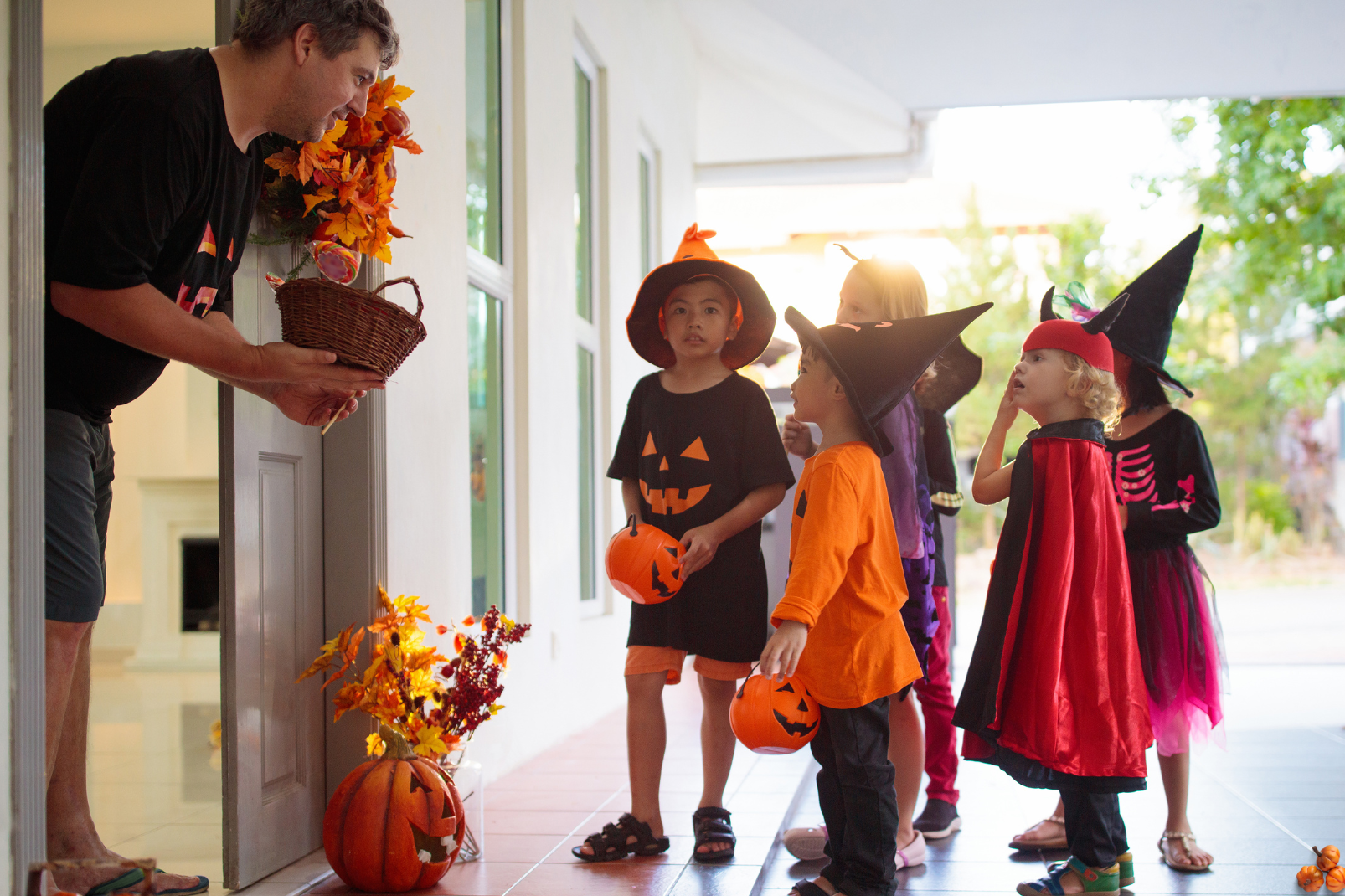
Young kids at a house trick-or-treating
A non-speaking child may communicate through sign language, pictures, a nod, or with help from a parent or caregiver. They may also simply stand quietly at the door and that's okay. Children shouldn't have to perform a particular behavior to earn a piece of candy.
Instead of asking, “What do you say?” or “Can you say trick-or-treat?”, simply offer the candy and say: “Happy Halloween!”
Eye Contact Isn't a Requirement for Kindness
A child may not look at you when you speak to them. They may look away, focus on something else, or avoid eye contact altogether. This doesn't mean they are being rude. For some autistic children, eye contact can be uncomfortable, distracting, or even overwhelming.
There are many ways to communicate attention, appreciation, and connection. Smile. Offer candy. Say “Happy Halloween.” Then allow the child to respond in whatever way is comfortable for them.
Give Children a Little Extra Time
Halloween can be exciting, but it can also be overwhelming. Flashing lights, loud music, decorations, and crowds can create a lot of sensory stimulation. A child might cover their ears, need extra time to approach the door, become focused on a decoration, or not respond right away.
What may look unusual to us may simply be a child's way of navigating an overwhelming environment. Give them a moment. A few extra seconds of patience can make a meaningful difference.
This Halloween, Let's Welcome Everyone
At Child Guidance Center, we know that every child and family is unique. There is no single way to communicate, participate, or experience the world.
This Halloween, let's choose patience over assumptions, understanding over judgment, and inclusion over expectations. Let’s give every trick-or-treater the same thing: a smile, a piece of candy, and a little kindness.
We may never know the story behind the child standing at our door, but for those few moments, we can make sure they know one thing:
They are welcome here.
Sources & Resources:
The following resources were used in writing this article and may provide additional information for families, caregivers, and community members:
ABA-LLC — “Trick or Treat Tips for Kids on the Autism Spectrum”
Practical suggestions for helping children on the autism spectrum prepare for and participate in Halloween and trick-or-treating.
Trick or Treat Tips for Kids on the Autism Spectrum - ABA-LLC
Autism Speaks — “Happy Halloween: A Guide for Making the Holiday Fun for Everyone”
Information about sensory considerations, costumes, trick-or-treating, communication differences, and ways families can make Halloween more comfortable and enjoyable.
Happy Halloween: A guide for making the holiday fun for everyone | Autism Speaks
Autism Speaks — “Autism and Eye Contact”
Information about why eye contact may be difficult or uncomfortable for some autistic individuals and the importance of considering alternative ways of communicating attention and engagement.
Autism and eye contact | Autism Speaks
Autism Speaks — Halloween Resources
Additional Halloween resources, including personalized teaching stories and information to help families prepare for Halloween activities.
Autism Halloween tips | Autism Speaks